What Type of Limo Is Best for Your Event in Minneapolis?
The right vehicle for a Minneapolis event comes down to two things: how many people are riding, and what the vehicle has to do that day. A group of four to eight who want a formal arrival books a stretch limousine. Up to 20 people who want to ride together in limousine-style seating book a limo coach. Guest shuttles and mid-size groups fit a 23-passenger mini coach. Large guest movements go on a 30, 40, or 56-passenger motorcoach. One to three passengers who want a polished arrival without the extra room book an executive sedan or a luxury SUV.
At Total Transportation, we have run chauffeured vehicles across Minneapolis and the Twin Cities since 1987, and our fleet covers around 60 vehicles plus motorcoaches, carrying anywhere from one passenger to 56. That range is the reason we can give you an honest recommendation instead of steering every event toward the same vehicle. Often the better booking is one mini coach instead of two stretch limousines, or a sedan instead of a limousine, and we would rather say so up front. Here is how we work through the decision with customers, including the Twin Cities details that usually settle it: guest counts, venue access, downtown loading rules, and Minnesota winters.

Limo Types and Passenger Capacity in the Twin Cities
Start with capacity. It eliminates most of the options in about a minute.
Our stretch limousines seat four or eight. They include televisions, Bluetooth audio, a privacy divider, leather perimeter seating, fiber-optic lighting, and tinted glass, and they arrive stocked with glasses, napkins, and ice. The motorcoaches carry Wi-Fi, a restroom, and multiple monitors, which starts to matter once a ride runs past 45 minutes.
Start With Your Passenger Count
Count the people who are actually riding, then add a buffer. Guests bring a plus-one nobody logged. A parent decides at the last minute to ride the shuttle instead of parking. The vehicle booked to exact capacity becomes a problem at the curb.
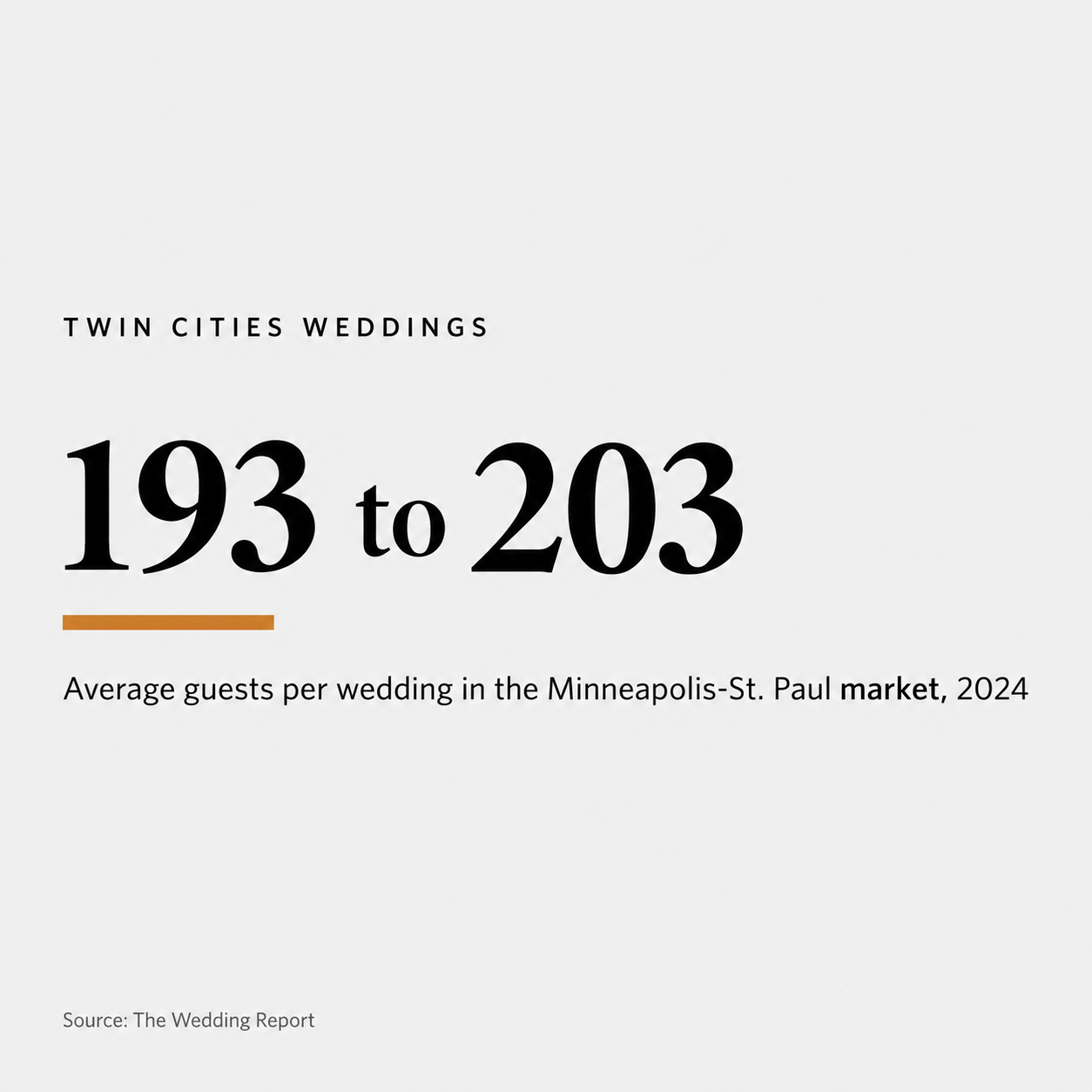
Twin Cities weddings make this concrete. The Minneapolis-St. Paul-Bloomington market averaged roughly 193 to 203 guests per wedding in 2024, according to The Wedding Report, well above the national average. At a 200-guest wedding where even a third of guests use transportation, you are having a motorcoach conversation. Smaller weddings are just as common here, and a 60-guest celebration usually runs better on a mini coach making two loops than on a coach sitting mostly empty.
For most events, we plan the wedding party or the core group into one vehicle and handle guests separately. Putting everyone in one oversized vehicle sounds efficient and rarely is, because the core group's schedule and the guests' schedule almost never line up.
What the Vehicle Has to Do That Day
Capacity tells you the size. The day's schedule tells you the type.
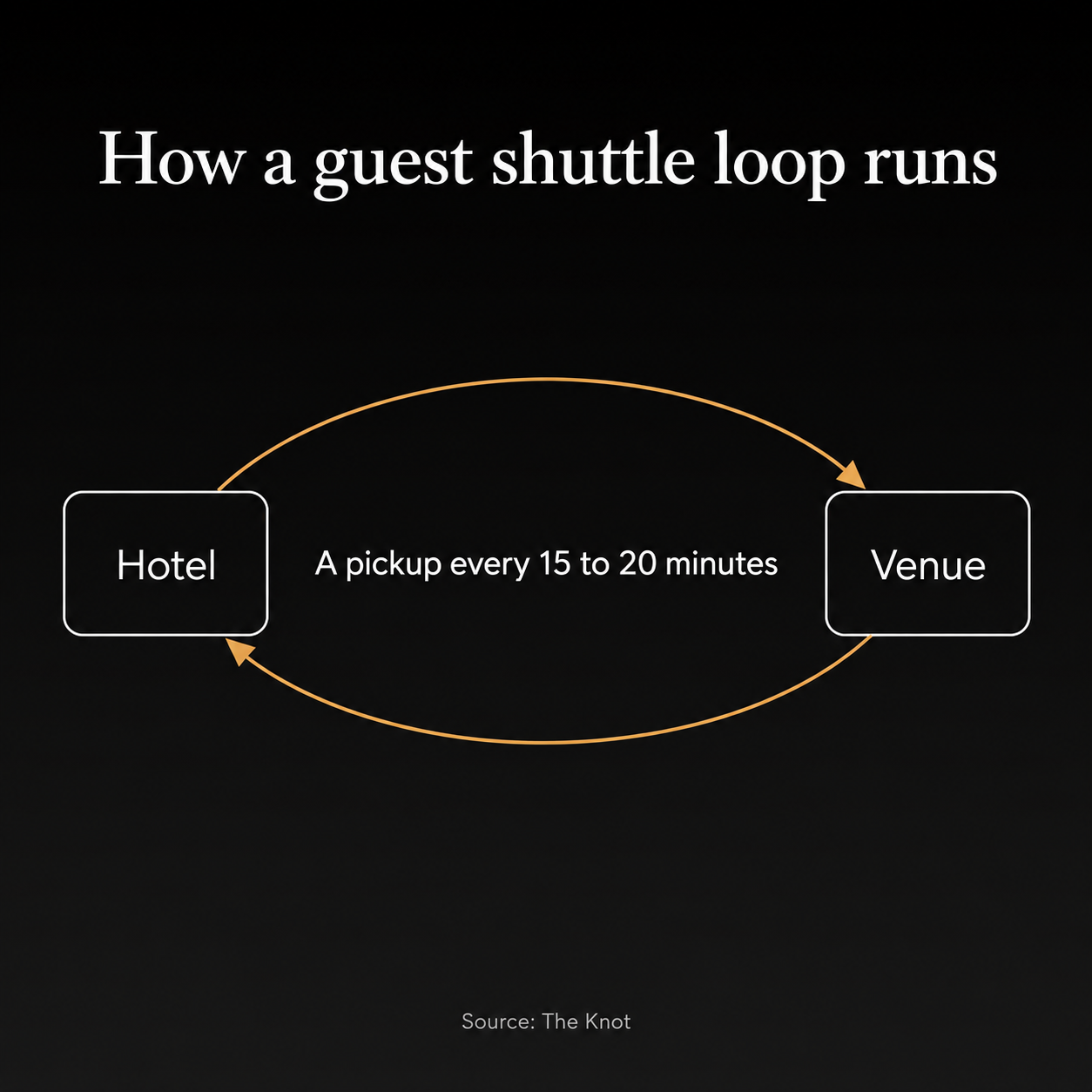
A single transfer, one pickup and one drop-off, is the simplest case, and almost any vehicle in the right size works. A shuttle loop is a different job. If the vehicle is running guests between a downtown hotel and a suburban venue over and over, you want a forward-facing mini coach or motorcoach that loads and unloads fast, not a stretch limousine with perimeter seating that takes several minutes to fill. The Knot recommends running continuous loops in 15 to 20 minute increments when the hotel and venue sit close together, with the vehicle on location about 15 minutes before each scheduled pickup.
The shape of the day also decides your hours. Hourly minimums are standard across chauffeured transportation, and they run longer on larger vehicles because a coach cannot be repositioned to another job in 30 minutes. If your event is an arrival, a four-hour gap, and a departure, tell us. Sometimes holding the vehicle is the right call, and sometimes two separate transfers cost less.
Luggage, Gear, and Winter Coats
Passenger capacity and luggage capacity are two different numbers. A sedan seats three comfortably, but three travelers with checked bags is a luxury SUV booking. Motorcoaches solve this cleanly with their under-floor bays, which is why they handle out-of-town group travel better than a run of vans.
In Minnesota, coats count. A December event where 20 guests each have a heavy coat eats real seating space in a limousine, and that alone sometimes moves the booking up one size.
Minnesota Weather and the Season You Are Booking
Weather is part of the booking decision here, not a footnote. The Minnesota Department of Public Safety reports that winter produces the state's highest crash frequency, even though summer months are deadliest for fatal crashes. Nationally, the Federal Highway Administration attributes more than 1,300 deaths and 116,800 injuries each year to crashes on snowy, slushy, or icy pavement.

For a winter wedding or a January corporate event, that points toward a larger, heavier vehicle with a professional chauffeur who runs these roads daily, and toward building extra time into the schedule instead of trimming it. We would rather stage a vehicle 20 minutes early in a snow event than explain a late arrival afterward.
Season also drives availability. Peak wedding season here runs May through October, and late September through mid-October brings the heaviest demand of the fall for color tours and outdoor venues. Saturdays in that stretch book out months ahead, and the larger the vehicle, the earlier it goes.
Venue Access and Downtown Minneapolis Loading
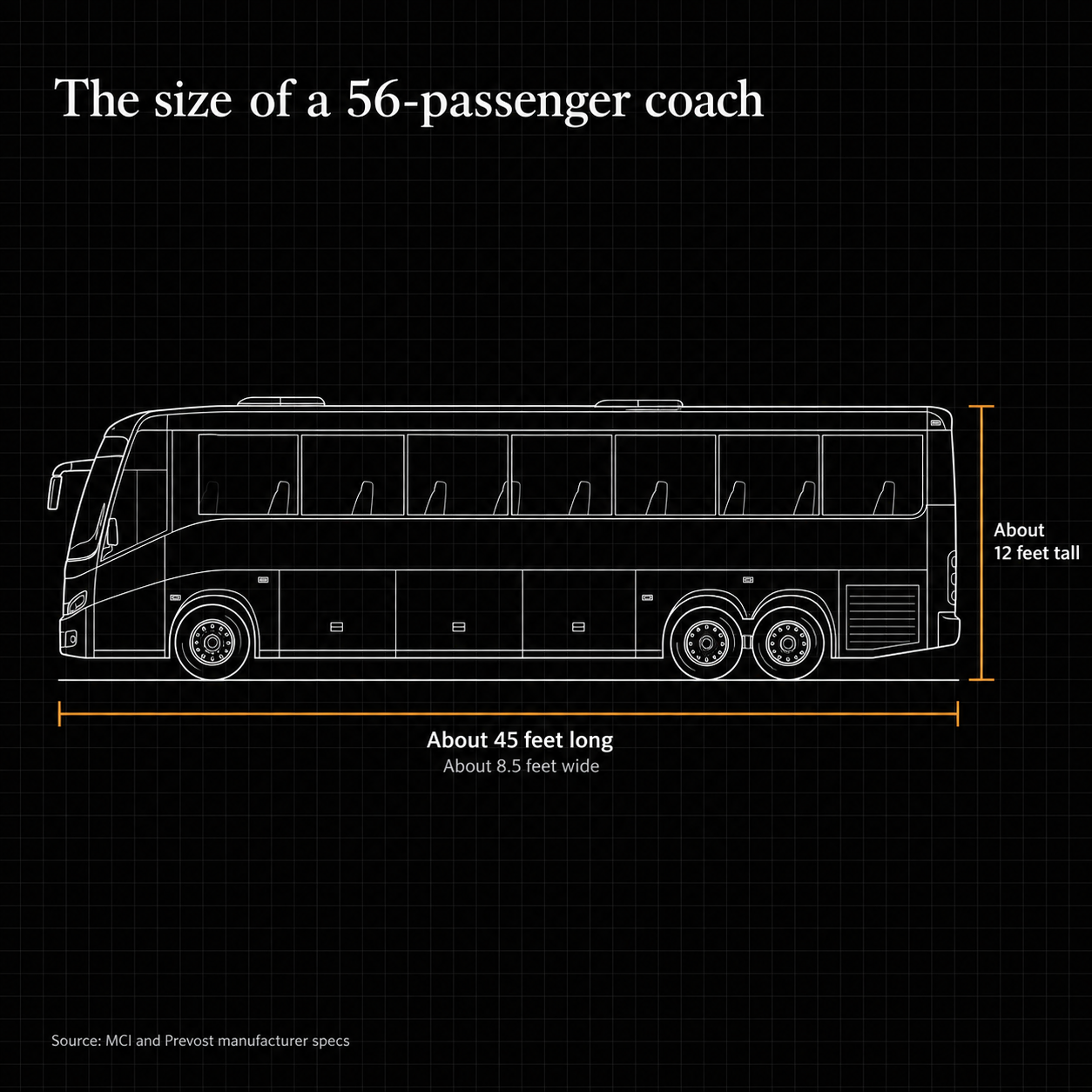
A 56-passenger coach is roughly 45 feet long, about 8.5 feet wide, and close to 12 feet tall, based on manufacturer specifications for the most common North American models. Those dimensions decide more bookings than people expect. Barn venues with gravel approaches, vineyard properties with tight turnarounds, and hotel porte-cocheres with low clearance frequently cannot take a full coach. Two mini coaches running the same route often work where one motorcoach physically cannot.
Downtown Minneapolis adds a rule most groups have never heard of. Parking a charter bus or other large vehicle on downtown streets to reach venues like Target Center, Target Field, US Bank Stadium, Orchestra Hall, or the Orpheum requires a parking permit purchased in advance through the city's charter bus permit program. A coach cannot idle at the curb while a group files out over 20 minutes. For any downtown event we treat the drop point, the staging location, and the pickup point as three separate decisions, and we handle the permitting rather than leaving it to the group.
Matching the Vehicle to the Event
Weddings
Most Twin Cities weddings use two or three vehicle types on the same day: a stretch limousine or limo coach for the wedding party, mini coaches or a motorcoach for guest shuttles, and often a sedan for parents or grandparents who need a door-to-door ride. Running all of it through one provider means one timeline and one point of contact instead of three vendors coordinating by text on the morning of. Our wedding transportation work earned us a place in The Knot's Hall of Fame, a designation that requires winning Best of Weddings four or more times.
Bachelor and Bachelorette Parties and Group Celebrations
For a celebration moving between several places over an evening, the question is how the group wants to ride between stops. A stretch limousine suits a group of six or eight. A limo coach handles up to 20 with room to stand and move around. The practical benefit is the same either way: everyone stays together, nobody in the group has to drive, and the schedule becomes somebody else's job. These fall under our unique events work.
Winery, Brewery, and Distillery Tours
Tour routes reward mid-size vehicles. A Sprinter or mini coach carries a group of 14 to 23 across four or five stops with quick loading at each one, and it fits parking lots a full coach cannot. Build in more time between stops than the map suggests, particularly on routes out toward Stillwater and the St. Croix Valley on a fall weekend.
Corporate Events, Road Shows, and Airport Runs
Executive sedans and SUVs cover individual corporate travel and airport transfers, with Sprinters and vans for teams traveling together. Conferences and multi-day events usually need a mix: sedans for executives, shuttles on a published loop for attendees, and a coach for any offsite. Recurring routes, like a daily employee shuttle, run under shuttles and contracts rather than one-off bookings.
Funerals and Family Services
Funeral transportation is usually a family limousine plus additional vehicles for extended family, on a two-hour minimum. The vehicle choice comes down to capacity and discretion, and the schedule is built around the funeral home's timeline rather than ours.
What Wedding Transportation Costs in the Twin Cities
We publish wedding and funeral base rates because guessing helps nobody. Wedding transportation runs on a two-hour minimum for most vehicles, a three-hour minimum on the 23-passenger mini coach, and a four-hour minimum on the 56-passenger motorcoach. Wedding base rates start at $414 for a four-passenger limousine and scale with vehicle size.
Everything outside weddings and funerals is quote-based, including corporate work, charter motorcoach trips, tours, and celebrations. Those rates depend on hours, distance, and vehicle mix, so a published number would be wrong more often than right. Give us the date, the headcount, and the route, and we will price it.
How to Confirm a Minneapolis Limo Company Is Licensed
Vetting the operator matters as much as picking the vehicle, and in Minnesota you can verify almost all of it yourself in a few minutes.
Minnesota tightened its rules recently. Updates to Minnesota Rules Chapter 8880, effective December 22, 2025, added an annual permit renewal requirement, required operators to obtain a USDOT number before renewal, and set audits at least once every three years. Anyone advertising limousine service in Minnesota without a current permit is operating outside the law.
A few things are worth confirming before you sign anything:
- The company holds a current MnDOT limousine permit and can produce the permit number
- The USDOT number returns a clean authority and safety record in the SAFER Company Snapshot
- Chauffeurs operating vehicles built to seat 16 or more hold a Commercial Driver's License with a Passenger endorsement
- Motorcoaches are recent enough to carry lap and shoulder belts at every seating position, which NHTSA has required on newly manufactured over-the-road buses since November 28, 2016
What to Ask About Maintenance and Chauffeurs
One question almost nobody asks is where the vehicles are maintained. We maintain, repair, detail, and fuel our entire fleet in-house at our own 50,000 square foot facility, including mechanical work, bodywork, and paint. Operators who outsource maintenance wait in line at an outside shop when something breaks the week of your event. We also invite corporate prospects to tour the facility and see the operation for themselves.
The same question applies to the people. Our chauffeurs are full-time career employees with benefits, some with up to 30 years here, all background-checked, drug and alcohol tested, and insurance-carrier approved. How we screen and train them is covered on our safety and training page, and our customer stories show how this plays out on real events. We have provided transportation for major Twin Cities events, including the 2016 Ryder Cup at Hazeltine and the 2018 Super Bowl LII Host Committee.
Common Questions About Booking a Limo in Minneapolis
How far in advance should I book a limo in the Twin Cities?
For a peak-season Saturday between May and October, book three to six months out, and earlier for motorcoaches and multi-vehicle weddings. Off-season weekday events can often be arranged within a few weeks.
Can a motorcoach reach my venue?
Not always. A 56-passenger coach is about 45 feet long and close to 12 feet tall, so tight rural approaches, gravel drives, and low porte-cocheres can rule it out. Send us the venue address before you commit to a vehicle size and we will confirm access.
Is one large vehicle better than two smaller ones?
When everyone boards at the same place at the same time, one larger vehicle is usually simpler and more economical. When the group is spread across hotels or riding on different schedules, two smaller vehicles almost always run better.
Booking Transportation for Your Twin Cities Event
Tell us your date, your headcount, your venues, and the rough shape of the day, and we will tell you which vehicles fit and which ones do not. We have been doing this across Minneapolis and the Twin Cities since 1987, and a live person answers our phone around the clock. We would rather talk you into the right vehicle than the biggest one. Contact us for a quote.
For faster booking, reporting and receipts, download our app